Author Archive David Adamson

ByDavid Adamson

7 Cryptocurrency Trends For 2026 & Beyond

Every crypto enthusiast would want to know about the latest trends before investing in a new cryptocurrency or becoming a part of a blockchain project. This is also particularly important when you’re looking to start your own business in the crypto space.

Having a good idea of what works and what doesn’t in the cryptocurrency industry will enable you to properly evaluate your options before proceeding.

Times have changed a lot since cryptocurrencies were first introduced about a decade back. Now, every major and minor finance/technology company wants to leverage cryptocurrencies for its own benefit.

If you’re trying the same, here are the top 7 Cryptocurrency Trends you should look into.

Security Tokens

Security tokens are cryptocurrencies that are regulated. Now, cryptocurrencies, by nature, cannot be regulated, i.e., designed to be controlled by a centralized authority. However, in order for cryptocurrencies to work as digital securities, they must be regulated under certain areas. This not only protects the interest of investors but also makes security tokens more trustworthy digital currencies.

Automation

Cryptocurrencies are playing a big role in the advancement of the automation of many processes, especially in the finance space. Companies looking to make their systems ready to track crypto movements and take decisions accordingly need to employ advanced automated tools that are faster than static systems. To keep up with the high level of development in the crypto industry, new and automated systems and services will be used.

Increased interest in Real-value altcoins

As already predicted by many expert investors in their articles, in 2020 and beyond, people will be looking to invest in altcoins that offer actual, real value to the audience. Besides digital payments, there are multiple industries where cryptocurrencies can find their usage.

Projects are, in fact, proving this with its highly secure and faster payment system coupled with a number of futuristic smart apps to be used in day-to-day lives.

AI for crypto investments

The use of automated robots, AI and machine learning has increased exponentially in the investment and finance sectors. The coming years will see a further rise in this trend, as more consumers will be using AI and machine learning systems, instead of real accountants, for performing day-to-day accounting activities as well as managing and making crypto investments. We might even see a boost in the number of crypto/blockchain projects utilizing AI.

Increase in Crypto knowledge

As more and more people start understanding the importance of cryptocurrencies, the companies are focusing on creating and releasing more educational resources to teach potential investors about cryptocurrencies and blockchain technology to bring them on board, encouraging them to invest in their crypto projects. With resources like online seminars, tutorials and certifications being readily available, it is now easier than ever for individuals to learn about cryptocurrencies.

Stronger regulations

With SEC and other financial institutions looking for ways to make crypto trading legal and somewhat regulated, we may just see more, new regulation standards granting investors with more powers to deal in cryptocurrencies. As the regulations related to the crypto industry become more agreeable, the demand for experts to handle organizations’ crypto operations will also increase.

Decrease in volatility


Crypto volatility refers to the frequent fluctuation in the prices of a cryptocurrency. In 2017, we witnessed a high disruption in the prices of many cryptocurrencies, including Bitcoin. However, since then, the prices have somewhat stabilized, as more companies are exploring utilities of cryptocurrencies for payments, exchange and more.

ByDavid Adamson

NFT Marketplace Sites List July 2026 [NFT Marketplaces Ideas]

NFT stands for non-fungible token. NFT Marketplace is the platform where NFTs can be buy, sell, trade, display and created after NFT listing services. If you want to develop your own platform and looking a solid ideas for NFT marketplace, you are at the right place.

In this blog we are going to share with you a list of NFT marketplaces and brief detail of how you can develop and marketing your own NFT marketplace like Rarible, Opensea, Superrare, Foundation, Poikacity, Decentraland, Gods Unchained, NFA Topshots, Nifty Gateway, Atomic Market, Axie Infinite, MarkersPlace and Cryptopunks. So without any delay, let’s get started.

Introduction of NFTs and NFT Marketplaces 

Blockchain technology, by itself, it’s relatively new. It all started with the introduction of bitcoin in 2009, and it is unbelievable that technology that is not even 15 years old has undergone so much transformation in a little over a decade.

Every year, there is something in the world of blockchain that gives huge popularity and becomes a technology heartthrob for aficionados. The latest addition to this list is the concept of non-fungible tokens or NFTs as they are commonly known. 

The history of NFTs can be traced back to 2014, but they had to wait for about 6 1/2 years to gain their well-deserved popularity. NFTs have grown to be more than a $200 million market in the past nine months, out of which 90% happened in February 2021.

The interesting, intriguing, and for entrepreneurially inclined, a lucrative part of this NFT revolution is that we have not even scratched the surface. It presents a profitable business opportunity for anyone who intends to start their own NFT marketplace.

While it cannot be denied that the business idea by itself is quite nascent, there are a few established and popular NFT marketplaces that have, in their own ways, shown how to build a perfect NFT marketplace by incorporating the best of the features that they offer and of course, by eliminating the flaws that they have.

Top 13 NFT Marketplaces Sites List and Ideas July 2026

Let us look at the list of top 13 different NFT marketplaces July 2026 and how you can get inspired to develop your own NFT marketplace from their ideas.

NFT Marketplace
  • NFT Marketplace like Rarible
  • NFT Marketplace like Opensea
  • NFT Marketplace like Superrare
  • NFT Marketplace like Foundation
  • NFT Marketplace like Polkacity
  • NFT Marketplace like Decentraland
  • NFT Marketplace like Gods Unchained
  • NFT Marketplace like NBA Topshots
  • NFT Marketplace like Nifty Gateway
  • NFT Marketplace like Atomic Market
  • NFT Marketplace like Axie Infinity
  • NFT Marketplace like MarkersPlace
  • NFT Marketplace like CryptoPunks

NFT Marketplace like Rarible
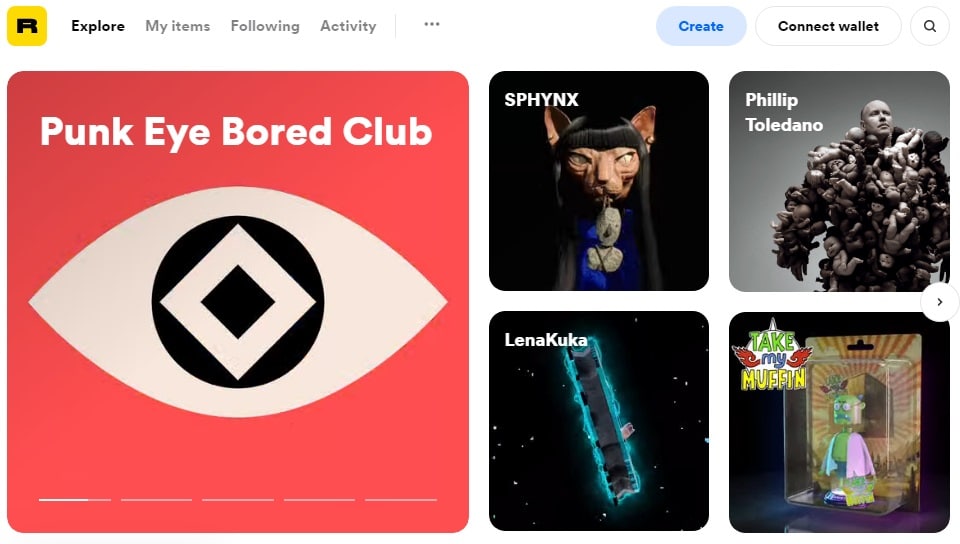
Rarible has become a synonym for NFT marketplaces. It probably is the first prominent name that skyrocketed in popularity, making it a common ground for creators and art collectors to collaborate over the digital space.

It will not be an exaggeration to say that Rarible laid the foundation for mini NFT marketplaces that can be considered market leaders today. Perhaps, the biggest selling point for Rarible was its simplicity and its intuitive user interface that made it a breeze even for the technically uninitiated to use. This ensured that the artist did not depend on any external talent to showcase their art on Rarible.

NFT Marketplace like OpenSea
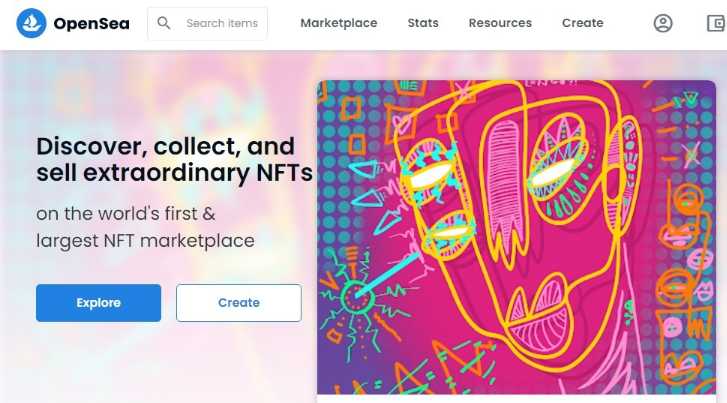
NFT Marketplace like OpenSea

OpenSea follows closely on the heels of Rarible when it comes to NFT marketplaces in terms of popularity. You know that OpenSea is a renowned name when 20th Century Fox partners with them to sell special edition digital posters of Deadpool two.

OpenSea showed to the world that there is no point of saturation when it comes to the crypto market. It is possible for two big fishes to exist peacefully in this large ocean.

NFT Marketplace like SuperRare

SuperRare extends the utility value of NFT marketplaces. Instead of functioning as a marketplace, confining itself to just transactions, SuperRare extends its utility into social networking. It means that on a marketplace like SuperRare, sellers can interact with creators, and both sellers and creators can form communities to discuss NFTs, their trade, the values, and the market in general.

NFT Marketplace like PolkaCity
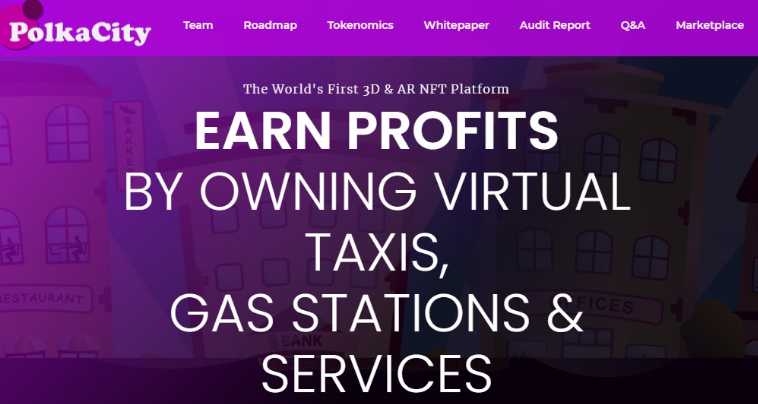
PolkaCity presents itself more as a platform for decentralized finance in addition to being a marketplace for NFTs. PolkaCity extends its utility by creating virtual spaces where users can buy a wide range of assets in a virtual city, presenting complete virtual experiences that include taxis, police stations, and services.

You can invest in these virtual assets, and they give real-world returns. PolkaCity is a perfect confluence of everything that blockchain technology is capable of, including decentralized finance, NFTs, and of course, the virtual universe. The PolkaCity ecosystem has its own token and is built on Ethereum.

NFT Marketplace like Foundation
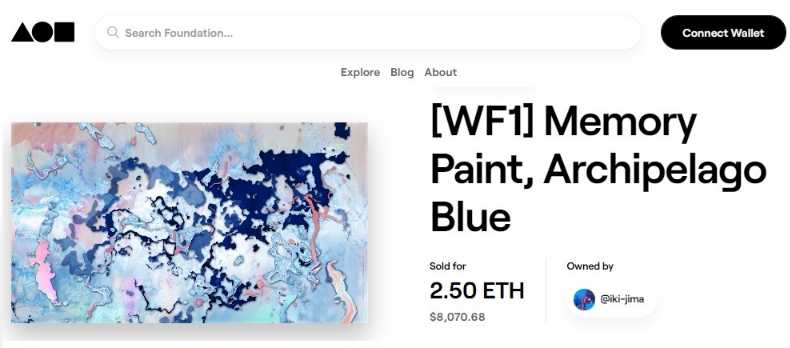
Foundation presents itself as a creative playground for artists, curators, and collectors. They have explicitly stated on their website that they aim to give these people an experience of a creative economy. The fact that it has been named “Foundation“ is a resounding testimony to the vision and mission that this platform holds for NFT creators and collectors.

NFT Marketplace like DecentraLand

The biggest revolution that NFTs have brought into the crypto/blockchain world is that they have not confined themselves to being purely transactional. DecentraLand is a fine example of that. DecentraLand is, in essence, a 3-D virtual reality platform that is powered by Ethereum. It is not even two years old, and it has already made waves in the crypto world. It is also a good example to show that even some of the most unexpected countries like Argentina can produce renowned NFTs and decentralized virtual ecosystems.

DecentraLand also shows that a good NFT marketplace with vision can attract investments from some formidable names. In June 2018, A digital real estate investment company paid close to $1 million for 259 parcels of DecentraLand with a vision to build a city styled after shopping district in Tokyo.

NFT Marketplace like Gods Unchained

Gods Unchained, as you may have known, it’s a digital card game that provides players with a sense of true ownership for their collection. It also gives players a facility to trade on open marketplaces. Every guard on Gods Unchained is, in essence, an NFT on Ethereum.

One of the earliest use cases for NFTs was in the world of gaming where it aims to decentralize gaming assets and to create complete gaming ecosystems. Gods Unchained is a fine example of how the world of gaming can immensely benefit from NFTs and could even grow so big that it can become a standalone NFT marketplace.

NFT Marketplace like NBA Top Shots

The National Basketball Association jumping into the NFT bandwagon is one of the most epoch-making moments in the history of both basketball and NFTs. NBA Top Shots facilitate the purchase of moments or short videos in the games and make fans claim ownership over it. The fact that the NBA has officially endorsed it can be considered a quantum leap because of the patronage it receives from renowned sporting bodies.

If every country and every game brings an NFT marketplace like NBA Top Shots, it will open up the floodgates of both participation and profitability.

NFT Marketplace like Atomic Market

Atomic Market, by definition, is a shared liquidity market smart contract that is used by multiple websites to provide the best possible user experience. This can be considered one of the most important quantum leaps for both NFTs and for the crypto world at large. Instead of creating marketplaces alone, there are businesses that have been striving to create smart contracts that facilitate easier trading of NFTs.

NFT Marketplace like Nifty Gateway

For every Toyota, there is a Lexus. This is precisely what the above NFT marketplace positions itself as. In a world of marketplaces springing up like mushrooms after rain, this marketplace claims itself to be a premium marketplace for NFTs. This opens up new possibilities because the world of digital collectibles is bound to have a line of demarcation between what could be considered consumer assets and premium assets.

NFT Marketplace like Axie Infinity

We have been talking a lot about how NFTs have unified blockchain technology with gaming. There have been attempts to unify gaming in popular culture with new technology like the blockchain, and Axie Infinity is a good example of it. It used the game mechanics of Pokémon and was created in the country of Vietnam. It made its most expensive collection of NFTs in June 2021 with more than $42 million in sales. It is built on the Ethereum blockchain.

NFT Marketplace like MakersPlace

The very name of this marketplace puts its focus on the makers or the creators. This shows that the NFT landscape is slowly tilting towards creators rather than being all about technology. The moment it transitions from being sent to the wrong technology to being centered around people who facilitate the trade, the platform is bound to be a runaway success, and MakersPlace is a great example of the possibilities when it comes to this space.

NFT Marketplace like CryptoPunks

CryptoPunks is sandwiched somewhere between the first NFT and the NFT rush! It was released in June 2017 as one of the first NFTs on the Ethereum blockchain. It was inspired by the punk scenes of London, and it even had the electronic music artist Daft punk. There are only 10,000 CryptoPunks that introduce the factor of rarity, making it unique and limited.

All these NFT marketplaces go on to show that you can incorporate multiple features into your NFT marketplace and also ensure that you understand your customers before you develop your NFT marketplace like the above NFTs!
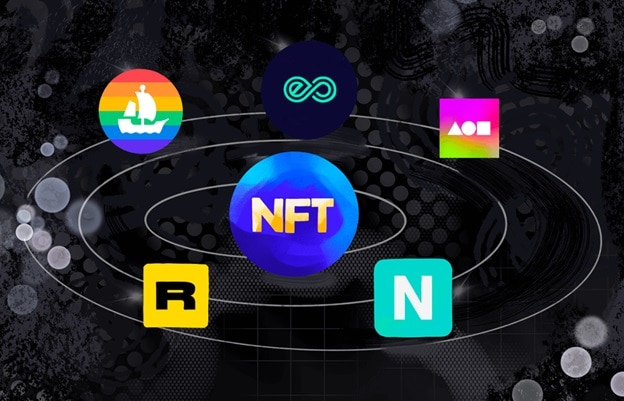
NFT Marketplace like CryptoPunks

Conclusion

On the surface, it might seem, as an aspiring crypto entrepreneur, that you are late for the party. However, it is always better to learn from the mistakes of others and to stand on the shoulders of giants. This is precisely the case with NFT marketplace development. If you would like to launch your own NFT marketplace, now is the perfect and the right time for you to do it.

It might be a hassle to develop your NFT marketplace from scratch. You can either go for a white label solution that replicates the features of any one of the successful NFT marketplaces mentioned above or even mix and match the features, so you have a custom-made marketplace that will brim with features of your choice, so you can create the next big thing in the NFT landscape.

ByDavid Adamson

Vend POS Integration with WooCommerce and Magento – A Window of New Opportunities for Retailers

Offline retailers are in survival mode due to the COVID-19 pandemic.

To overturn the impact of the novel coronavirus outbreak on their business, taking the business online is the need of the hour.

WooCommerce and Magento are two of the leading eCommerce platforms that offer feature-rich and customizable solutions for retailers.

While physical stores are experiencing a hard time, WooCommerce and Magento can be a great escape from the crisis for specialty retailers.

On top of that, Vend POS integration with WooCommerce and Magento can solve multiple problems related to managing stores, both offline and online.

Here we will discuss in detail, the major advantages of integrating Vend POS with WooCommerce and Magento. Also, why is it important for offline retailers to establish an online presence.

integrating Vend POS with WooCommerce and Magento

Vend POS + WooCommerce

WooCommerce is one of the leading eCommerce platforms in the world. It is built on WordPress that powers 30% of the web.

Website TechnologiesUsageMarket Share
WordPress30%60.20%
Joomla3.10%6.30%
Drupal2.20%4.40%
Magento1.20%2.40%
Shopify1%1.90%

Now, being built on WordPress automatically ensures data security of the highest standards and trustworthiness. Available as a free plugin for WordPress, you can easily plug-and-play WooCommerce if you have an existing WordPress account.

Other features that come together with WooCommerce are:

Customizable solutions

If you are starting your own online store, you would want to give it your own touch and feel to make it unique. With WooCommerce, customization is never an issue. You can easily customize your online store using thousands of storefront themes. Retailers of all sizes can start off with WooCommerce and grow their business online.

Worldwide community

WooCommerce has a community of stores and developers all around the globe that keeps making the platform better. It is also open-source, thus ensuring you are in charge of the proceedings on your store.

High Trust Factor

As it is available as a free plugin on WordPress, the security standards are uncompromising and without any loopholes. WordPress has gained trust from people all over the world as it runs 30% of the web. As data security and trustworthiness are of the utmost importance, WordPress fulfills them. 

Integrating Vend POS with WooCommerce

Vend’s easy-to-use POS combines with your inventory management system to enable you to offer multi channel experience with your eCommerce store. Vend POS gets seamlessly integrated with WooCommerce, to enable retailers to sell online, or on social media, or in-store.

Other features of Vend POS integration with WooCommerce include:

  • Sell easily on social media viz, Facebook, Instagram, and any other social platforms
  • Keep your inventory in sync across all the sales channels in real-time
  • Offer omnichannel  experience to the customers
  • Download all your web orders to the Vend POS and keep the sales and inventory data in-sync
  • Import your entire catalog into Vend in a quick and easy manner
  • Manage the data of your customers whether new or existing, with ease
  • Generate sales reports on online sales and customers
  • Add new outlets to the Vend POS easily when your business grows

Hence, merchants operating their online store on WooCommerce can get real benefits in the time of COVID-19.

Vend + Magento

Magento is an open-source PHP platform that accounts for 12% of the eCommerce market (including open source and enterprise versions). It is one of the most popular Content Management Systems (CMS) for online shops worldwide.

Magento2020

Magento runs 12% of eCommerce sites, which shows how wide the reach is in the eCommerce landscape. Retailers operating their stores on Magento can experience three times faster growth.

Magento runs 12% of eCommerce sites

Other advantages of operating a Magento store include:

High usability and customization

A host of exciting features such as full ownership of the website, mobile-optimized site with enhanced functionality, easy customer segmentation, and SEO-friendliness comes with Magento store

Plethora of Extensions

Magento classifies over 4000 extensions that are available on its platform with 2,367 for Magento 2 and the remaining for Magento 1. These extensions can enhance store capabilities with a single click. 

Customizable

The CMS platform offers a range of themes and templates to add a unique touch and feel to the store. Merchants can set a standard for their store using these themes and templates.

Integrating Vend with Magento

By integrating Vend POS with Magento, merchants can unlock new capabilities of their store and also manage the in-store and online business easily.

The list of features of integrating Vend POS with Magento include:

  • Synchronization of mission-critical data such as inventory, orders, and customers between Magento and Vend POS
  • Reduction in errors such as double-data entry and overselling
  • Generation of sales reports made through multiple sales channels
  • Provide omnichannel experience to the customers with real-time data management

As you can see, the Vend POS integration with Magento can create a huge difference in managing and running the business. In the time of COVID-19, when people are not willing to step out, the POS eCommerce integration can help you level up the game for your retail business.

Wrapping Up

The COVID-19 pandemic has really pushed the retail sector on the backfoot with small and medium-sized businesses reeling due to losses. It is time to try out a new strategy by stepping into the online world and staying afloat. The eCommerce world is set to experience a tough competition in the coming years as more and more merchants will come online due to the new normal.

ByDavid Adamson

NLP SEO: What Is It, And How Can It Boost Your Site?

Google is a semantic search engine, which means Google tries to answer queries based on search intent. NLP SEO Experts illustrates the concept with the help of a clever example –  What would be your reaction if you search for ‘Coffee’ and Google shows you ‘Coffee fields’? I guess you will think, “What better can I write to make Google understand what I’m trying to say?” But how about Google bettering its algorithm to understand your search intent? BINGO!!! This is what NLP (Natural Language Processing) SEO is all about. 

Let’s dig deeper into NLP – 

What is NLP? 

NLP stands for Natural Language Processing. It is one of the constituents of artificial intelligence, which helps you to understand users’ queries by combining the knowledge of linguistics and computer science. 

How does Google help you with the correct answers using NLP? 

Whenever a query is entered into Google, Google tries its best to find the appropriate answers. And since Google cannot read your mind (though it tries hard to do so), it tries to offer an answer with multiple answering options like – “Featured Snippets, People Also Ask, Variety of Blogs”.

Why is it necessary to work on NLP SEO?

The eventual aim of NLP is to satisfy users because only those users who get the appropriate answers to their queries consider making purchases from a particular website. But if you are providing non-credible information just to impress users so that they get convinced to buy from you, Google will consider dropping your rankings for circulating irrelevant and misleading information. 

What is required from an SEO Executive’s end when it comes to NLP SEO? 

SEO Executives need to ensure that whichever blog they are publishing needs to justify the title. A blog with irrelevant information is the biggest killer of User Experience. This is the main reason that blogs with repetitive and misleading information usually experience a drop in rankings. 

Apart from that, make sure to mark structured data markup when you are publishing a blog on Google. It will help Google to understand the purpose of your blog. Therefore, Google will show such blogs only to the people who actually need them.

How does NLP work? 

It is likely that you are curious about how NLP works. It is Google’s algorithm which analyzes a user’s query with a detailed approach (that usually never goes wrong). We ourselves have experienced it. 

  • First of all, it analyzes the syntax. It is all about understanding the meaning behind what you have written and phrases you have used. To illustrate, there is a famous idiom, “Apple of one’s eye”. Suppose you don’t know the meaning of it and you approach Google for help and search, ‘What is the apple of one’s eye?’ and imagine Google showing you pictures where humans have placed apples on their eyes while lying down. Would you ever consider getting back to Google to get an answer to your query? So, Google must understand the syntax before it offers any answer to you. 
  • Next, it analyzes the sentiments. In this stage, Google tries to figure out the tone of your query. It is a painstaking effort to decode the emotion behind it. Take an example; you broke up with your boyfriend, and now you’re in a terrible phase of your life. You have typed the query, “What to do to get over a breakup?” This indicates that you’re aiming to fill your life with positivity and find ways to do so through Google. In that scenario, if Google starts to show you the articles, blogs or featured snippets of how a breakup can break you and take a toll on your mental health, you will naturally get demotivated. So, it is essential for Google to identify the intent and sentiment behind the query.  
  • After understanding the syntax and sentiments, Google gets at work. It commences to categorize the content based on your query. Next, Google tries to find out entities (images & videos) to satisfy your question with the visual assets. 

Did you know? 

No matter what language you have used to write blogs, articles or frequently asked questions, if Google finds it relevant to someone’s query, it can use transcripts to answer a particular query. 

Which positive changes have been brought up by NLP SEO?

There are plenty of positive changes that came to light with the help of NLP SEO. Here are some of the potential changes: 

  • A big “NO” to Black Hat SEO 

Earlier, there were different parameters which Google used to use to make a content rank. The most prominent of them were keywords. Google used to reward the content based on the keyword density. But now, Google is rewarding only that content with Page 1 Rankings which justifies the title of the blog. 

  • Irrelevant Images and Videos are no more useful 

Gone are the days when Google used to rank content based on the number of images and videos present in your blog or article. But now things are not the same. Google only shows those images and videos corresponding to a query which has the power to satisfy the search intent. 

FAQs about NLP SEO (Natural Language Processing Search Engine Optimization)

1. What is NLP SEO?

NLP SEO refers to the practice of optimizing online content using natural language processing techniques to enhance its visibility and ranking on search engines. It involves aligning your content with how people naturally speak and search, making it more appealing to search algorithms.

2. How does NLP impact SEO?

NLP helps search engines better understand user intent and context by analyzing natural language patterns. This enables search engines to deliver more relevant results, ultimately improving the user experience and potentially boosting your website’s ranking.

3. What are some NLP SEO techniques?

NLP SEO techniques include using long-tail keywords, semantic analysis, content readability optimization, voice search optimization, and structuring content in a way that mirrors natural conversation.

4. How does NLP affect keyword research?

NLP has transformed keyword research by encouraging the use of conversational and long-tail keywords. Instead of focusing solely on short, rigid keyword phrases, NLP-driven SEO encourages understanding the user’s intent behind the query and targeting related phrases.

5. Is traditional keyword stuffing still effective?

No, traditional keyword stuffing is no longer effective and can actually harm your SEO efforts. Search engines now value content that provides value to users, and overloading your content with keywords can lead to penalties and poor user experience.

6. How does NLP impact content creation?

NLP encourages content creators to focus on producing high-quality, comprehensive content that directly addresses user queries. It also emphasizes the use of diverse vocabulary and natural language structures to better match user search patterns.

7. Does NLP SEO consider voice search?

Yes, NLP SEO is particularly important for optimizing content for voice search. Voice searches are often longer and more conversational than typed queries, so optimizing for natural language patterns is crucial to appear in voice search results.

8. Can NLP understand user intent better?

Yes, NLP technologies can analyze the context and semantics of user queries, helping search engines discern user intent more accurately. This enables search engines to provide more relevant results and helps content creators align their content with user needs.

9. Is NLP only about content optimization?

While NLP plays a significant role in content optimization, it also extends to other areas of SEO such as sentiment analysis, understanding user reviews, and improving overall user experience on websites.

10. Is NLP SEO a one-time effort?

No, NLP SEO is an ongoing process. Search algorithms and user behavior evolve, so continuously monitoring trends, updating content, and adapting your strategies to match changing search patterns is crucial for maintaining good SEO performance.

11. Are there specific tools for NLP SEO?

Yes, there are various NLP tools and platforms that can assist in keyword research, content optimization, and sentiment analysis. Examples include Google’s NLP API, SEMrush, Moz, and SurferSEO.

12. Can NLP help with international SEO?

Absolutely. NLP can aid in understanding and adapting to different language nuances and cultural contexts, making international SEO efforts more effective in connecting with diverse audiences.

Conclusion

Natural Language Processing has become a big thing in the SEO world. It has changed the course of blog writing. Satisfaction with search intent is dominating the word count, all thanks to NLP. It has emerged as a significant revolution brought up by Artificial Intelligence which tries to answer queries appropriately by understanding the syntax and sentiments. 

ByDavid Adamson

Why Do You Need CRM Software: List of Top 10 CRM Software 2026

We all are aware that customer relationship is the critical key aspect throughout the business journey. CRMs are one of the robust tools these days that can be beneficial for accelerating businesses while enabling easy collaboration, automating operations, synchronizing data, and more.

Also, a survey reveals that adaptation to Customer Relationship Management technology is expected to increase to $43.5 billion worldwide by 2026.

Customer relationship management is a structured approach to build, handle, and maintain strong connections with customers. In simple terms, CRM software helps you track all the encounters with the consumer throughout their journey. Furthermore, it serves as a central hub for businesses, ensuring security, integrity, and scalability of consumers communications.

Customer Relationship Management Importance

Every successful business these days knows the significance of CRM. It provides the firms with a unified platform to easily handle the clients, aligns the marketing efforts, automates daily operations, and delivers quality customer assistance.

Furthermore, the customer relationship management tool enables organizations to improve workflow and drive increased sales. The best part about these software solutions synchronizes with varying apps like Gmail, Microsoft Outlook, and more.

Focuses on Consumer Needs

When the businesses see a rapid increase in expansion or sales, a sudden up and down in the leads is likely to happen.

But integrating an effective CRM system can help you eliminate such chances of decline in sales as they are designed considering the user experience. In simple terms, CRM software focuses on everything you do around your consumers.

For example, it aligns all the business operations that your sales representatives, marketing experts, and customer support teams perform. As a result, it enables businesses to focus on company objectives and meet consumer requirements.

Easy Collaboration Between Marketing and Sales Teams

Cross-functional team collaboration is critical to achieving business success. Such collaboration helps in simplifying all the phases of the consumer journey.

Here, the internal sales team is responsible for delivering the customer data so that the marketing team can put in their best efforts. As a result, customers will have a seamless experience buying from your brand and will become loyal customers too.

Simplified Synchronization and Data Sharing

CRMs are responsible for simplifying the tasks such as sharing data or synchronization. For example, in earlier times, updating the customer information like name, phone number or address manually was time-consuming.

But today, no matter if it is just a contact name or number or finding who talks with certain users, all the details sync up and update the system automatically. You can modify the data your way and track whatever you want to. For instance, new leads, repeat customers, conversions, and so on.

Furthermore, such synchronization of data and efficient collaboration among the teams allows easy access to accurate information.

This way, you can deliver an exceptional user experience without any hurdles and automate most of the time-consuming efforts.

Excellent Customer Service

To track all the customer data and other analytics and reach the target audience, integrating CRM software is critical.

For example, a user visits your site and is interested in your product/service as they clicked on your contact details or email option. As a result, having the CRM system will allow you to easily communicate with the consumers and better determine their needs.

This means you will be able to deliver your consumers an invaluable experience and retain customer loyalty.

Consumer Interactions Made Simple

There are enormous opportunities to engage the visitors or reach the target audience online like social media, live chat, or video call.

CRM solutions available in the market these days are capable of meeting the challenges faced by sales representatives or marketing teams.

For example,

You can track calls or assign the calls
Handle customer queries via live chat
Utilize CRM to monitor business questions on social media
Enable email tracking, automates marketing campaigns, and take on-time follow-ups.

Top 10 CRM Software in 2026

Here is the list of top 10 CRM software in 2026.

Salonist

Salonist CRM Software

Salonist is a leading salon CRM software that caters to businesses of all sizes with a diverse set of features and functionalities. It enhances everything from brand exposure to revenue, time management, and more.

Features:

Online bookings and inventory management
KPI reporting, notification/alerts, and online payment gateways
Loyalty system, email marketing, SMS campaigns, and more


HubSpot CRM

HubSpot CRM

A well-known and free CRM tool by HubSpot enables businesses for effective lead management. Furthermore, with the HubSpot CRM pro version, the sales representatives get access to core functionality like tracking conversions, content management, and more.

Features:

Live chat
Categorization
Search
Performance Metrics

Freshworks CRM

Freshworks CRM

This CRM software is perfect for all-size businesses as it incorporates solutions for both the marketing team and sales representatives for improving the consumer experience. Moreover, this software solution enables staff to interact among themselves or the consumers leveraging a variety of channels.

Features:

Customer Support Analytics
Performance metrics
Knowledge management

PipeDrive

The most popular CRM tool of all in the market is PipeDrive. This software focuses on the sales pipeline to keep the transparency of leads, conversions, and increased profits.

Features:

Easy access to interface anytime anywhere
Leads and conversions layout
Free trial to assess the benefits

Salesforce CRM

Salesforce CRM lets you close the activities or deals conveniently. All business sizes can implement this CRM to boost sales and automate the business tasks, resulting in informed decisions.

Features:

Track leads and examines conversion rate
Seamless cloud storage and analytics capabilities
Search, customer assistance tracking, and metrics

Zoho CRM

The customer relationship management tool by Zoho enables the firms to shut the deals, streamline the tasks, and have control over the processes. It also lets the organizations communicate with the user via live chat, email, or video call.

Features:

Integrates with around 400 apps
Automates important tasks associated with sales, marketing, and user experience
Reduces operational costs

Agile CRM

One-stop CRM solution to avail the features and functionalities you are looking for. It provides deal management, virtual appointment booking, contact management, and so on.

Features:

Email marketing and social suite
Mobile marketing and knowledge management
Self-service portal

Netsuite CRM

Netsuite CRM is software designed by blending both the traditional and modern CRM abilities. With this tool, you can access customer interaction records and other vital data.

Features:

Marketing support
Excellent customer assistance
Affiliates and salesforce automation

Yetiforce CRM

Yetiforce, an award-winning tool, can be customized to any business requirements. You can also integrate the Yetiforce CRM with third-party libraries to deliver extensive outcomes.

Features:

Equipped with 80 admin tools and 80 user modules
Customer service analytics
Customer support tracking, Self-service portal, and live chat

SutiCRM

Businesses can integrate SutiCRM to handle consumer interactions and their vital information. Also, it automates the marketing processes and other consumer assistance activities.

Features:

Boosts partner and supplier interactions
Provides metrics, custom support, live chat, and more
Lets you understand the user needs and integrate the CRM accordingly


Boost Business Efficiency With CRM

Once you understand the importance of integrating CRM into your business, you will never stand behind in meeting the consumer needs or raining your company profits. So, choose the right tool based on your team requirements and get started.

Thanks for Reading!!

ByDavid Adamson

What Is Token Wrapping? And How To Develop It? 

Have you ever heard about wrapped tokens? If you are inclined towards blockchain and cryptocurrency, you must have come across this term. In recent times, the Blockchain market has been booming and is likely to reach USD 469.49 billion by the end of 2030. 

However, what exactly is token wrapping? In simple terms, wrapping a token refers to the process of swapping one token for another in an equal amount. Read this article to explore more details about wrapped tokens.  

Let’s dive in! 

What are Wrapped Tokens? 

You may have an idea that blockchains like Ethereum and Bitcoin are separate. So, they cannot communicate with each other easily. In other words, you cannot use Bitcoin directly on the Ethereum blockchain.  

Ever wondered why? Well, it is because the Bitcoin blockchain is completely unaware of what is happening with the Ethereum blockchain. So, cross-chain use seems impossible.  

However, Token Wrapping can serve as an ideal solution to this problem. Wrapped tokens are the tokens that make it possible to transfer the value of a native asset from one blockchain to another. It allows you to move assets between the blockchains efficiently and use them in the crypto ecosystem. 

Pros of Wrapped Tokens 

Are you wondering about the benefits of wrapped tokens? If yes, consider the perks below. 

Liquidity 

One of the prominent benefits of using wrapped tokens is liquidity. It allows the use of tokens in various ways on non-native blockchains and increases capital efficiency. Moreover, it enables investors to easily sell and buy assets, thereby boosting Blockchain marketing techniques

Interoperability 

The wrapping of tokens makes it possible to transact cryptocurrencies on non-native blockchains. It proves to be less expensive and faster in comparison to native blockchains. Moreover, they can offer easy access to specific applications. 

Increases efficiency 

Token wrapping facilitates more efficient and fast settlement as well as the transfer of assets. As a result, it can significantly lower the chance of potential errors or the risk of fraud. Moreover, it can even reduce the need for intermediaries. Ultimately, it helps make financial transactions quicker and ensures optimum convenience for the users. 

Lowers costs 

As discussed above, using the wrapped tokens can reduce the need for intermediaries. As a result, it can effectively bring down the total cost of financial transactions. 

Improves security 

Security is a top priority for users when it comes to financial transactions. So, if you are leveraging wrapped tokens, you need not worry about security. As the wrapped tokens involve the use of smart contracts, they offer higher security in comparison to other financial instruments. 

Cons of Using Wrapped Tokens 

No doubt, wrapped tokens provide several benefits to users. However, there are certain drawbacks too. Some of the drawbacks of using wrapped tokens are listed below. 

Inequivalent value 

Theoretically, the wrapped tokens must have the same value as the original cryptocurrency. However, it does not always work that way. Especially during high volatility, the wrapped token value is likely to be lower than the original crypto coin. 

Fees 

No doubt, the use of wrapping tokens allows you to save more by lowering transaction fees. However, the minting process can trigger additional fees. 

How are Wrapped Tokens Developed? 

Now that you have a basic idea of token wrapping, you must be wondering how these tokens are developed. Well, the algorithm is quite simple to understand. To wrap a token, you will need a smart contract and a set process to ensure interoperability. The tokens are developed and even destroyed through a process known as minting or burning. 

The custodians in charge will mint the wrapped tokens, such as WBTC (Wrapped Bitcoin). After the underlying BTC (Bitcoin) is locked away, it is possible to mint an equivalent amount of WBTC. This process is referred to as the wrapping of tokens.  

With the use of a smart contract, the underlying asset is wrapped in a digital vault. The newly wrapped asset is then minted for application on another blockchain. Today, Blockchain Applications have been the most preferred Finance Apps for startups wherein it has made it easy for users to have effective financial transactions. 

Key Components of Wrapped Tokens 

The different components of wrapped tokens are listed below:- 

An underlying asset 

For token wrapping, you will first require an underlying asset. It can be a traditional asset, a cryptocurrency, or even a non-fungible token (NFT). This underlying asset will provide the essential backing and value for the wrapped token. 

Smart Contracts 

To wrap tokens, you will require smart contracts. They are self-executing contracts that have the terms of the agreement directly written into code. Smart contracts play an important role in specifying the standards and rules for the wrapped tokens. From how to create the token to how to transfer it, smart contracts include everything. 

Blockchain platform 

Blockchain platforms like Binance Smart Chain and Ethereum are essential for the creation of wrapped tokens. However, the choice of platform will depend on the capabilities and features of the wrapped token. 

Token Standard 

Token wrapping follows a specific token standard. It includes the standards and rules to be followed while performing the token wrapping process. 

Digital asset exchange 

It is possible to buy and sell wrapped tokens on digital asset exchanges. Digital asset exchanges are the platforms that find use for liquidity and trading. The platform you use can have a significant impact on the liquidity and accessibility of the token. 

Commonly Wrapped Tokens 

There are several tokens that can be wrapped. Some of the most commonly wrapped tokens include the following: 

  • Wrapped Ethereum 
  • Wrapped Bitcoin 
  • Wrapped Gold 
  • Wrapped XRP 
  • Wrapped Stablecoins 

Conclusion 

By now, you must have a complete idea about token wrapping and how to develop it. While it may seem like a complex concept, it actually isn’t. Wrapped tokens have a significant impact on interoperability in the world of blockchain. 

Token wrapping makes it possible to use different blockchain assets in a single crypto ecosystem. Moreover, it enhances the convenience of users and allows faster financial transactions. Wrapped tokens are likely to shape the future of the crypto industry and provide users with several appealing benefits.  

ByDavid Adamson

On-Page SEO – A Complete Guide in 2026

To be successful in organic search, you must optimize for a range of metrics that search engines recognize, including technical, on-page, and off-page SEO. Though most people believe that off-page SEO is the most significant component in ranking, this is not the case.

If you don’t pay heed to the fundamentals — on-page SEO, then off-page SEO won’t help you much.  Moreover. as the search landscape is constantly changing, there are no alternatives to keep updated on On-page SEO knowledge.

In this article, we will go over what on-page SEO is, why it is essential, and how you can implement it on your web pages. Without further ado, let’s start.

What is On-page SEO?

On-page SEO (also known as “on-site SEO”) is the technique of optimizing websites in order to increase a website’s search engine rankings and generate organic traffic and an SEO company knows it well. On-page SEO comprises optimizing your headlines, HTML elements (title, meta, and header), and graphics, in addition to producing relevant, high-quality content.

Why do On-page SEO?

On-page SEO is the most crucial factor to generate quality traffic as well as rank on search engines, especially in Google. It assists search engines in analyzing your website and web pages in order to determine whether a searcher’s query is relevant to your site.

Google’s algorithm is continuously being updated to better comprehend a searcher’s intent and offer search results that match that user’s expectations. Your website and its content must be optimized for search engines such as Google. This helps search engines understand your site and determine where to rank it.

Do you know that the top results on Google receive more than 32% traffic, while the first page of search results receives up to 91.5% of traffic? Imagine how powerful on-page SEO is. Furthermore, you cannot just disregard on-page SEO, because you have greater control when optimizing for on-site features – as opposed to off-page SEO, which is comprised of external factors (i.e., backlinks).

List of On-page SEO checklist

You have already gained an understanding of what On-page SEO is and why it is crucial to rank your website on Google. Now, in this section, I’ll show you the on-page SEO checklist that you must follow if you want to boost your traffic.

#1 – Content Optimization

The first step to doing on-page SEO is to optimize your content. You have your content that meets searcher intent, you now need to do some technical parts such as keyword placing, meta tag management, etc. we have provided some factors that you may consider to optimize your content.

#2 – Keyword Placement

This is an old-school on-page SEO technique that still works. Simply utilize your primary keyword once in the first 100-150 words of your content. Google gives greater weight to phrases that are towards the top of your page.

#3 – H1 Tag

Use the H1 tag for your blog title. The H1 tag is automatically added to your blog post title by most cms (such as WordPress). You’re good to go if this is the case. However, this isn’t always the case. In your website’s code, make sure the title is wrapped in an H1 tag.

H1 Html Code – <h1>Heading</h1>

#4 – H2 Tag

Your primary keyword should appear in at least one subheading. The subheadings should wrap with the H2 tag.

H2 Html Code – <h2>Sub-Heading</h2>

#5 – Keyword Frequency

Place the main keyword and different forms of the main keyword throughout the article. This isn’t an instance of keyword stuffing in the traditional sense. It’s as easy as repeating your target keyword a few times to convince Google that your website is genuinely focused on that topic. You can use 3-4 times of your keyword in a 1500-word post.

External links to related pages help Google figure out what your page is about. It also demonstrates to Google that your page is a reliable source of information.

#7 – Image Optimization

Images may help you rank in Google image searches, bringing you more visitors. According to Google, filenames include information about the image’s topic. Here’s how you should rename your images-

  • Be descriptive
  • Keep it short.
  • Don’t overuse keywords.
  • Between words, use dashes.
  • Compress the image
  • Alt Tag

Alt Tag Html Code – <img src=”example.com/img_girl.jpg” alt=”Girl”>

#8 – Meta & Description Tags

According to Google, title tags seem to “come in handy” with rankings. As a consequence, it’s beneficial to optimize them. Your description also gives the same story. Even though Google does not use your description to understand the content on your page, searchers do. Here’s how you can optimize the title and description:

  • Include your keyword in the title as soon as possible.
  • In the title tag, use modifiers such as “best”, “guide”, “checklist”, “fast” and “review” etc.
  • Write a meta description that is distinctive and keyword-rich.

Meta Tag Html Code – <title>On-Page SEO Tips – A Complete Guide In 2026 </title>

Description Tag Html Code – <meta name=”description” content=”On Page SEO – Do you want to know about on page SEO? If you answer is yes then this is the best place to know everything about it.”/>

#9 – URL Mapping

URL mapping is the process of determining which pages of a website should have particular keywords in order to enhance the entire website or web page’s optimization as a whole. Often, only the main page is targeted by a large number of keywords. However, this is not an SEO-friendly technique because targeting several keywords on the site is impossible. As a result, each page should be targeted with a specific term, which is referred to as URL Mapping.

Example – https://example.com/abc-xyz

#9 – Keyword Research

Conducting extensive keyword research is important. There are many keywords research tools available including Ahrefs, Google keyword planner, etc. Before you can use SEO to help organizations grow, you must first understand who they are, who their customers are, and what their goals are.

On-page SEO vs. off-page SEO: What’s the difference? 

On-page SEO factorsOff-page SEO factors
Content
Keywords
Title tag
Meta description
Alt text
URL mapping
Internal and External linking
Backlinks
Domain authority
Social signals
Pay per click

Conclusion

We’ve discussed about On-page SEO. There is no way to neglect on-page SEO in 2026. If you want to get more traffic, you need to write excellent content as well as place the keyword throughout the content, title, and meta description. Also, you need to optimize images to rank your web pages.

ByDavid Adamson

Token Wrapping: Exploring the World of Wrapped Tokens

In the dynamic and ever-evolving world of cryptocurrency and blockchain technology, new concepts and innovations are constantly emerging. One such fascinating concept is that of “Token Wrapping.” This article delves into the intricacies of token wrapping, its creation process, and how wrapped tokens function within the blockchain ecosystem.

What is Token Wrapping?

Token wrapping, in the context of blockchain and cryptocurrency, refers to the process of creating a new token that represents an existing asset or cryptocurrency. The newly created token, often referred to as a “wrapped token,” mirrors the value and properties of the underlying asset, but with additional functionalities enabled by the blockchain’s smart contracts.

Wrapped tokens bridge the gap between different blockchain networks, allowing assets from one blockchain to be represented and used on another blockchain. This cross-chain compatibility significantly enhances liquidity, accessibility, and utility of the wrapped tokens, as they can now be seamlessly traded and utilized within various decentralized applications (DApps) and decentralized exchanges (DEXs).

How to Create a Wrapped Token?

Creating a wrapped token involves a two-step process: locking the original asset and minting the wrapped token.

  1. Locking the Original Asset: The first step is to lock the original asset, which means depositing it into a smart contract or a custodian that is responsible for holding and safeguarding the asset. Once the asset is locked, an equivalent amount of wrapped tokens is minted and issued on the secondary blockchain.
  2. Minting the Wrapped Token: With the original asset securely locked, the second step is to mint the wrapped token on the secondary blockchain. This is typically done through smart contracts that manage the issuance and redemption of wrapped tokens based on the locked asset’s value. The smart contract ensures that the supply of wrapped tokens remains pegged to the original asset, maintaining a consistent value ratio.

How do Wrapped Tokens Work?

Wrapped tokens work through a series of smart contracts that manage the conversion, issuance, and redemption processes. Let’s understand the key components of how wrapped tokens function:

  1. Locking and Unlocking: When a user wants to wrap their original asset, they send it to a designated address, which locks the asset. In return, an equivalent amount of wrapped tokens is issued to the user’s wallet on the secondary blockchain. Conversely, when a user wants to “unwrap” their wrapped tokens and retrieve the original asset, they initiate the process through the smart contract, and the wrapped tokens are burned, unlocking the original asset, and sending it back to the user.
  2. Custodians and Audits: The security and legitimacy of wrapped tokens heavily depend on the custodians who hold and manage the original assets. Custodians are entities responsible for safeguarding the locked assets and ensuring their value is always backed by the issued wrapped tokens. Regular audits are conducted to maintain transparency and confirm that the supply of wrapped tokens matches the value of the locked assets.
  3. Cross-Chain Interoperability: Wrapped tokens enable cross-chain interoperability, allowing assets from different blockchains to be represented on secondary blockchains. This facilitates the seamless transfer of assets between different ecosystems and unlocks new possibilities for decentralized finance (DeFi) and decentralized applications.

Wrapped Tokens List: Top 5 Wrapped Tokens 2023

Here is a list of some of the most popular wrapped tokens:

Wrapped Bitcoin (WBTC): The most widely used wrapped token, WBTC is a Bitcoin-based token that is pegged to the value of Bitcoin. It is used for trading and liquidity purposes on DEXs and other platforms.

Wrapped Ether (WETH): A wrapped version of Ether that is compatible with the ERC-20 token standard. WETH is used on DeFi platforms and can be traded on exchanges.

Wrapped Bitcoin Cash (WBCH): A wrapped version of Bitcoin Cash that is compatible with the ERC-20 token standard. WBCH is used on DeFi platforms and can be traded on exchanges.

Wrapped Litecoin (WLTC): A wrapped version of Litecoin that is compatible with the ERC-20 token standard. WLTC is used on DeFi platforms and can be traded on exchanges.

Wrapped Zcash (WZEC): A wrapped version of Zcash that is compatible with the ERC-20 token standard. WZEC is used on DeFi platforms and can be traded on exchanges.

Benefits of Using Wrapped Tokens

Here are some of the benefits of using wrapped tokens:

Interoperability: Wrapped tokens allow cryptocurrencies to be transacted on non-native blockchains, which might be faster or less expensive than their native blockchains. They also provide access to specific applications.

Liquidity: Wrapped tokens can provide liquidity for cryptocurrencies that are not natively supported by a particular blockchain. This can make it easier to trade these cryptocurrencies and to use them in DeFi applications.

Staking: Some wrapped tokens can be staked to earn rewards. This can be a way to earn passive income on your cryptocurrency holdings.
If you are interested in using wrapped tokens, there are a few things you should keep in mind:

Security: It is important to make sure that the wrapped token you are using is secure. There have been cases of wrapped tokens being hacked, so it is important to do your research before you invest.

Fees: There may be fees associated with using wrapped tokens. These fees can vary depending on the platform you are using and the type of wrapped token you are using.

Regulation: The regulatory landscape for wrapped tokens is still evolving. It is important to stay up-to-date on the latest regulations so that you can comply with the law.

Overall, wrapped tokens can be a valuable tool for traders and investors. They offer a number of benefits, such as interoperability, liquidity, and staking. However, it is important to do your research before you use wrapped tokens, as there are some risks involved.

FAQs about Wrapped Token

1. What is wrapping a token?

Wrapping a token refers to the process of creating a wrapped version of an existing asset or cryptocurrency on a different blockchain. The wrapped token represents the value and properties of the original asset and enables cross-chain compatibility and usage.

2. What are the risks of wrapped tokens?

While wrapped tokens offer several advantages, they also come with certain risks. The primary risks include:

  • Custodial Risk: Wrapped tokens depend on custodians to manage the locked assets. If a custodian faces security breaches or mismanagement, it may jeopardize the value of the wrapped tokens.
  • Smart Contract Vulnerabilities: Wrapped tokens rely on smart contracts for issuance and redemption. Any vulnerabilities or bugs in the smart contract code can lead to potential exploits and loss of funds.
  • Regulatory Risks: Depending on the jurisdiction, the status of wrapped tokens may be subject to regulatory scrutiny, potentially impacting their usage and liquidity.

3. Is wrapping a token taxable?

The tax implications of wrapping a token may vary depending on the jurisdiction and local tax laws. In some regions, converting an asset into a wrapped token might trigger taxable events, such as capital gains tax. It’s essential for individuals to consult with tax professionals to understand their specific tax obligations.

Bottom Lines

Token wrapping introduces a fascinating concept in the blockchain space, allowing for greater liquidity and interoperability between different blockchain networks. By creating wrapped tokens that represent the value of original assets, users gain access to new decentralized financial opportunities and a more connected blockchain ecosystem.

However, it’s crucial to be aware of the associated risks and potential regulatory considerations when dealing with wrapped tokens. As the technology continues to evolve, token wrapping is likely to play an increasingly significant role in shaping the future of decentralized finance.

ByDavid Adamson

Digital Marketing Trends of 2026– Everything You Need To Know

Digital marketing is the most innovative and trending business these days. Million of digital marketers are find new ways to get more impression, engagement, sales and brand awareness on daily basis. In this blog, you will read about the latest digital marketing trend of 2026.

Besides, some expected digital marketing trends are mentioned in this blog that guides you to take your business to the next level.

These trends you can’t ignore if want to rock your business in the year 2026. Read it & set a clear goal to work on expected trends and thrive your online business in 2026.

Gone those days when people used to visit brick-stone stores because of the outstanding online marketing trends.

The future of digital marketing seems very bright in 2026. Digital marketers are making themselves prepare to jump into the race of online marketing while using the user’s experience at this time., And competing with each other to provide better and satisfying customer experience.

There is no doubt that the future of digital marketing is brighter because of high online trends. Ample of opportunities in digital marketing in 2026 is going to open for the customers as well as for digital marketers. Digital marketing company would also play an effective role in it.

Although the constant changes in technology are really challenging for digital marketers. Matching those changes requires your constant hard work and dedication.

There are so many expected 2026 trends in digital marketing. That means lots of technological and other changes would happen. So, be prepare yourself for those changes and ready to work on that.

Let’s include all those factors or trends to your websites that would provide a good user experience. Now let’s have look at those expected trends which are expecting to enhance digital marketing to the next level.

There are some expected digital marketing trends are mentioned that you can’t ignore if want to succeed in your online business in 2026.

Conversational Marketing

Conversational marketing is surely going to be one of the highlighted trends in 2026.

It is a real-time conversational. People love to discuss directly the products/services they are going to avail of. In conversational marketing, people can directly chat or ask the query to the digital marketer via messages.

It is a fast and effective way of communication and feels like you are talking face-to-face. In 2026, it is surely going to evolve because no one likes to fill the form, wait for the response and other procedures. They directly contact through conversational marketing.

Consumer Privacy

The consumer privacy policy is evolving because users are smart and they online visit the websites which are secure. So, those websites which would be secure, get the high ranking in SERP.

And, people trust high-rank websites the most. Privacy regulation such as GDPR and others are giving much attention to improving the data privacy.

They are increasing fines that means focus would be more on consumer privacy in 2026. It is another trend of digital marketing in 2026 that would be highlighted.

Social Media Marketing

Social media is the heart of digital marketers. This is the place where they get a number of potential customers for their businesses.

Today it is high on “digital marketing trend” but this journey is not going to stop. It would be enhanced in 2026. It is expected that social media marketing would have the utmost importance in the upcoming year.

So, you can relook at your social media marketing strategies and make some effective changes for the upcoming year to grow your business. So, make effective strategies for every social media platform such as Facebook, Twitter, Instagram, and others.

If you want a better result, then plan your strategies according to the type of audience on every platform.

Interactive & Informative Content

Content is the king and it is the factor that is very crucial for the online websites today and forever. High quality, fresh, well-written, up-to-date and relevant content is always gotten preference from the search engines.

And, help a website to be ranked on the top position in the search engine result page.

In addition to this, what is going to change in regards to the content in the year 2021 is only your content should be interactive. Your content should be informative and interactive so that the user finds it engaging.

If you are planning to rock your business in 2026, then update your content. And make it that great that it enlivens customer interest in your products/services.

Virtual and Augmented Reality

Virtual and Augmented reality are advanced technologies in the field of digital marketing. These technologies are ideal for enlivening the customers’ experience.

Although, virtual reality technology is high in trend in recent years. But it is expected that in the year 2021, augmented technology is going to surpass it. Big companies have shown that augmented reality is going to be in trend for digital marketing purposes.

Progressive Web Apps

From fun to work to communicate with various purposes, people do all in their smartphones. Every year, mobile searches doubling. So, it is a very important factor for the year 2026 as well. So, develop your website and make the necessary changes on your website to make it mobile-friendly.

The progressive web app is an advanced and effective format that is ideal to create websites. The functionality of these websites created by this format meets the requirements of mobile apps.

This technique enables to work user in offline mode. It is good from the point of view of developers as well because they don’t need to waste their time to create mobile versions of websites.

It is a high chance this technique would be used more in the year 2026. So, shift your focus on this format and rock your website on high rank in SERP and grow your business.

Artificial Intelligence

Artificial intelligence or AL will undoubtedly be the heart and soul of every business and industry this year. Giant brands like Uber and Microsoft is already using this technology effectively.

Al accurately analyzes online surfers, consumers’ data, demographics, behavior and search patterns to help businesses give insights and understand how their customers find their goods and services.

This year AI will be implemented in ecommerce transactions, email marketing, and personalization, content creation, communication, and product recommendations. It will not only help businesses to cut staff costs but will also help them to grow by manifold.

Customer Experience

Undoubtedly, this year will be the year of customers, consumers, and buyers.

No brands will no longer focus on convincing their target audience to purchase their products or avail their services in their marketing campaigns but to provide their consumers awesome customer experience that will effectively propel them to come back to buy more products from them and thus become their loyal customers. CX is already the most uttered buzz word in the business world.

Visualization

Visuals will rule the digital marketing world for a long period of time. In this date and era, people prefer visuals more when compared to the plain old text. The famous examples are Instagram & Pinterest.

Now, big giant companies are also heavily investing in Visuals such as Google, Yahoo, and Bing. Also, research shows that visuals are easier to remember when compared to written content.

Thus, this year will witness many businesses adding images, infographics, videos and data to their text in order to make it more attractive, interactive and hence easy to absorb by the audiences.

Chatbots

Chatbots will continue to be an essential part of digital marketing. This AI-based technology is already a huge hit with online surfers as now businesses can interact, chat with their consumers 24/7 thus answering their queries and solving their issues.

Also, a recent study showed that many consumers prefer interacting with responsive chatbots that are available 24/7. As they not only answer you promptly but recall your purchasing history accurately and never lose their patience.

This year, many organizations will incorporate this technology into their sites to offer top-notch customer service.

Personalization

Businesses need to personalize their services, products, and emails if they want to stand out from their competitors.

Some of the big examples of personalization are giant brands like Amazon and Netflix.

By personalizing your goods, you will not only increase your sales but will also create a loyal customer base for your company.

Video Marketing

This trend is not going to slow down or go anywhere at least for the next 10 to 15 years. Now online surfers and consumers respond more to videos than text or picture.

Also, recent studies have shown video marketing has improved their conversion rates as consumers feel more confident to purchase products and services online when they have seen a video demonstration of the same.

Also, the shareability rate of videos is high and people by seeing the video make up their mind whether to purchase that product online or not. If you want to increase your sales this year, then it is highly suggested to indulge in video marketing.

The digital marketing companies that you hire for SEO services also provide video production services in their package.

Influencer Marketing

Last year, through influencer marketing, many brands were successful in creating their buzz, enhance their visibility and churn a huge amount of money.

Big brands hire YouTube & Instagram celebrities to market their products on the said channels so that their followers purchase their products as followers trust the opinion of their favorite personalities more than brands. 

There are many examples and case studies that show how brands had skyrocket sales just by bringing famous bloggers, personalities and social media celebrities on board.

Conclusion: –

Digital marketing has been around for a decade now and is still the most effective way to reach potential customers. It is also the fastest-growing channel for marketers. When you hear about digital marketing, which are the three things that come to your mind? Revenue generation, ROI, and talent acquisition. Digital marketing is a complex channel with its trends changing every year. In 2026, an average adult spends 12 hours per day on digital devices. By 2020, that number will be 9 hours. This means that we are spending more time online than sleeping and working combined!

Digital marketing is a rapidly growing industry that needs to continue hard work to maintain a constant high-end online presence. Above-suggested are expected trends in 2026 of digital marketing.

Hope you would like this read and work on all these trends to take your business to the heights in 2026. In addition, there are several other trends on which you have to work hard for growing your business in 2026.

ByDavid Adamson

10 Digital Marketing Mistakes to Avoid at All Costs

Digital marketing can be a tricky maze to navigate, especially when you’re looking for a digital marketing course, and even the most experienced marketers can stumble upon some pitfalls. But fear not!

In this guide, we’ll help you sidestep those missteps with ease and make your digital marketing journey, including finding the right digital marketing course, a roaring success.

So, grab a cup of coffee and prepare to uncover the top 10 digital marketing mistakes to avoid at all costs

Neglecting Your Target Audience

One of the biggest blunders in digital marketing is overlooking your target audience. Failing to understand their needs, preferences, and pain points can result in a misaligned marketing strategy.

For example, imagine a company selling skateboards targeting senior citizens instead of thrill-seeking teenagers. By conducting thorough market research, you can ensure your message reaches the right people at the right time.

Overlooking the Power of SEO

Search Engine Optimization (SEO) serves as the backbone of digital marketing, driving online success and enhancing visibility in the vast digital landscape. Neglecting SEO can leave your website languishing in the depths of search engine obscurity.

Your website should be optimized for relevant keywords, have a user-friendly structure, and offer valuable content. Remember, without SEO, your website is like a well-kept secret that nobody knows about!

Riddle

I am the king of content, loved by both Google and readers alike. I am the secret to organic traffic, and my kingdom is vast and ever-expanding. What am I?

Answer: Search Engine Optimization (SEO)

Ignoring Social Media Engagement

Social media is a treasure trove for connecting with your audience, building brand awareness, and driving traffic. Failing to engage with your followers, responding to their queries, and providing valuable content can be detrimental.

Let’s take an example: a coffee shop that never responds to comments on their Instagram posts. People may start to wonder if they’re too busy napping in a caffeine-induced coma!

Neglecting Mobile Optimization

In today’s mobile-centric world, neglecting to optimize your website and marketing campaigns for mobile users is a cardinal sin. Mobile traffic is on the rise, and a clunky, non-responsive website will send visitors fleeing faster than Usain Bolt in a 100-meter race.

Ensure your website is mobile-friendly and loads quickly to keep visitors engaged and prevent them from bouncing away.

Failing to Leverage Content Marketing

Digital Marketing Mistakes

Content is king, and if you’re not utilizing it effectively, you’re missing out on a goldmine of opportunities. Creating high-quality, relevant, and engaging content helps you establish authority, attract new customers, and foster customer loyalty.

Imagine a clothing brand that never shares fashion tips, style guides, or trends on their blog—customers might think they’re stuck in a fashion time warp!

Joke:

Why did the digital marketer bring a ladder to work?

Because they heard the CEO wanted higher conversion rates!

Relying Solely on Paid Advertising

While paid advertising can be effective, putting all your eggs in one basket is a dangerous game. Relying solely on paid ads can drain your budget and fail to provide sustainable long-term results.

A diversified marketing strategy that includes organic search, social media, and email marketing can yield a higher return on investment and keep your budget intact.

Forgetting the Power of Email Marketing

Some may say email marketing is passé, but don’t be fooled! Email marketing continues to be a potent instrument for nurturing leads and fostering conversions.

However, bombarding your subscribers with irrelevant or excessive emails is a surefire way to land in the dreaded spam folder. Build meaningful relationships by sending personalized, valuable, and timely emails to keep your subscribers eagerly opening their inbox.

Neglecting Analytics and Data

If you’re not measuring, you’re not managing! Neglecting analytics and data can leave you flying blind in the vast digital marketing landscape.

By monitoring key metrics, such as conversion rates, click-through rates, and customer engagement, you can make data-driven decisions and optimize your campaigns for better results. Remember, numbers don’t lie, but they can definitely tell a few jokes!

Overlooking the Importance of Branding

In a sea of competitors, having a strong and consistent brand identity can set you apart from the crowd. Neglecting branding can result in a generic, forgettable presence that fails to resonate with your target audience.

Picture a shoe brand that keeps changing its logo, colors, and messaging like a chameleon on a catwalk. Customers might wonder if they’re dealing with a shoe store or a secret identity crisis!

Lack of Adaptability and Innovation

The digital marketing landscape is ever-evolving, and failure to adapt can lead to stagnation and lost opportunities. Being open to new trends, technologies, and consumer behavior is vital for staying ahead of the curve.

Remember, even the most iconic brands like Coca-Cola had to evolve from their original recipe to keep up with changing tastes!

Conclusion

You’ve now successfully dodged the 10 most treacherous digital marketing mistakes! By avoiding these pitfalls, you’re well on your way to achieving digital marketing course in Ludhiana greatness.

Remember, mistakes can be valuable learning experiences, but why not learn from others’ mistakes and avoid them altogether?

Embrace the power of SEO, engage with your audience, and always keep your digital marketing strategies fresh and innovative. Now, go forth and conquer the digital marketing world with confidence!